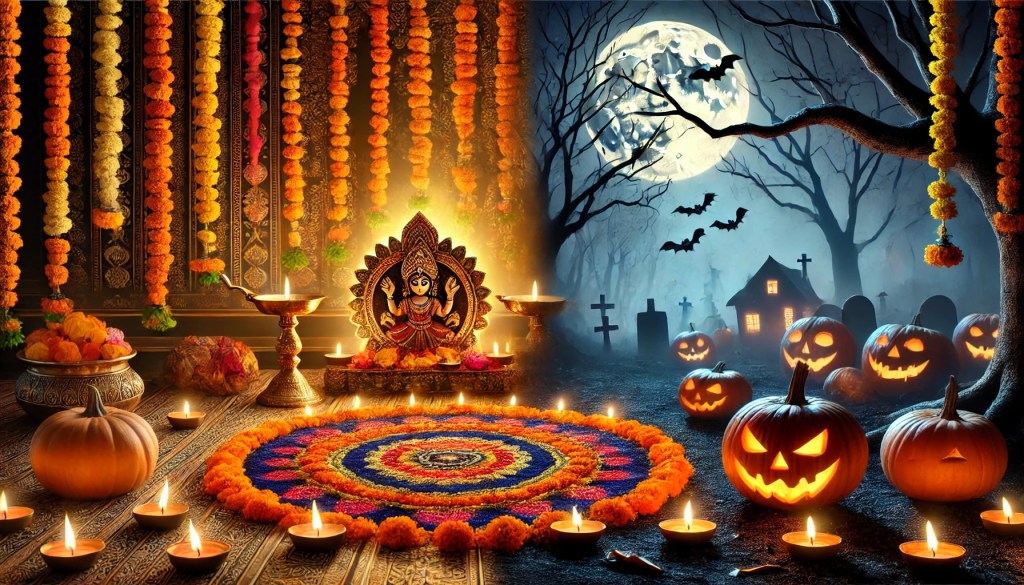
Halloween and Diwali are two vibrant festivals, each with its own unique history, symbols, and purpose. Though this year they fall around the same time of year, understanding their individual stories and values adds depth to our own celebrations. When we appreciate the essence of each festival, we can experience a more meaningful connection to its spirit. Let’s not jump to celebrate both with same feelings and understand their unique importance and how we should look into them.
Halloween
Halloween’s origins trace back over 2,000 years to the Celtic festival of Samhain, celebrated on October 31 to mark the end of harvest and the start of winter. Celts believed that this night blurred the boundary between the living and the dead, allowing spirits to return to earth. To protect themselves, they lit bonfires, wore costumes, and held rituals to ward off unwelcome spirits.
As the festival evolved, the Romans, and later the church, added new elements, including honoring saints and celebrating All Saints’ Day on November 1. The evening before became All Hallows’ Eve, or Halloween. By the early 20th century, Halloween in America transformed into a community-based holiday focused on costumes, trick-or-treating, and festivities.
In Hindu culture, a similar sentiment of honoring ancestors can be seen in ‘Shraddha’, a ritual during Pitru Paksha to respect and remember deceased family members. Families offer food, water, and prayers to nourish ancestral spirits and seek blessings. Though different in form, both Halloween and Shraddha remind us of our connection to past generations and the lasting impact they have on our lives.
During these days, Hindus traditionally refrain from buying new items or starting new ventures. This period, dedicated to honoring and remembering ancestors, is seen as a time of reverence rather than celebration. Many Hindus avoid auspicious activities, such as marriages, housewarming ceremonies, and major purchases, to focus on rituals and prayers for the departed
Diwali
Diwali, a most significance festival in Hindu culture, symbolizes the victory of good over evil and light over darkness. One of its most beloved stories recounts the return of Lord Rama to Ayodhya after defeating the demon king Ravana. To honor his homecoming, the people lit oil lamps (diyas) across the city, symbolizing the triumph of righteousness.
Celebrated over five days, Diwali embraces themes of wealth, health, gratitude, and family unity, each day carrying its own traditions and meaning:
- Dhanteras (Day of Wealth): Homes are cleaned and decorated, offerings made to Lakshmi, the goddess of wealth, for prosperity and well-being.
- Naraka Chaturdashi (Choti Diwali): Symbolizes the triumph of good over evil, celebrated with morning baths and lighting lamps to ward off negative energy.
- Lakshmi Puja (Main Diwali): The central day of Diwali, where families worship Lakshmi and Lord Ganesha, gather for blessings, and celebrate with lights and sweets.
- Govardhan Puja (Annakut): Celebrates gratitude to nature and Lord Krishna’s protection by offering dishes and prayers, emphasizing respect for natural abundance.
- Bhai Dooj (Day of Sibling Bond): Honors sibling relationships, with rituals symbolizing love, care, and family unity.
During this time, people light their homes, burst fire crackers, exchange the gifts and sweets and do the pooja of Goddess Laxmi to invite wealth and prosperity.
Both Halloween and Diwali teach us the importance of honoring tradition, connecting with our past, and celebrating life’s essential values. Halloween reminds us of the thin boundary between worlds, encouraging remembrance and reverence. Diwali, on the other hand, uplifts the spirit with its focus on light and moral strength, guiding us toward a life filled with gratitude, protection, and familial bonds.
In celebrating each festival thoughtfully, we deepen our respect for diverse cultures and values. Let’s not mix them and try to make both of them looks alike. Because each festival’s unique significance shines through. By doing so, we preserve the beauty and sanctity of both, allowing their timeless messages to enrich our lives.

 The Hindu Pencil
Leave a comment