
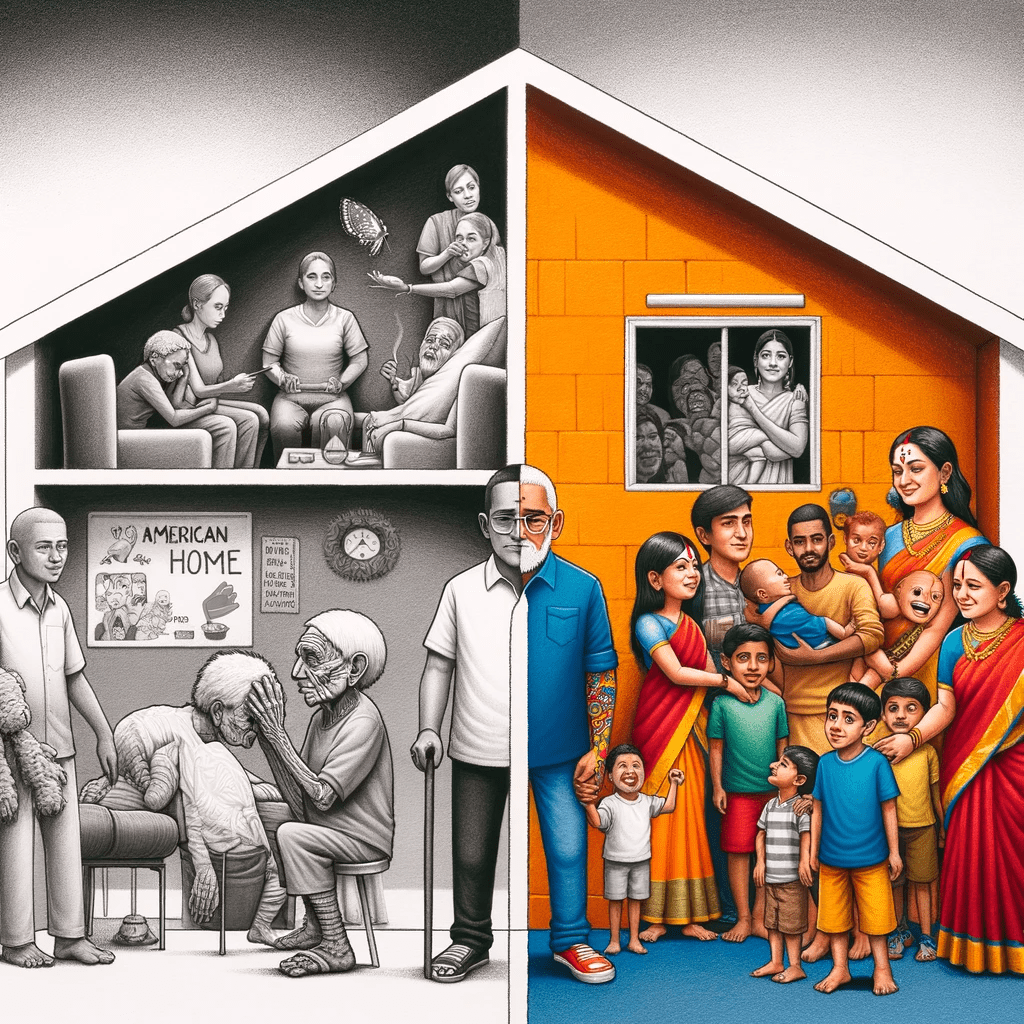
The term ‘Hindu Parivaar’ encapsulates the essence of the entire Hindu society in just one word. In Bharat, the formation of any entity or institution is often referred to with the term ‘parivaar’ or family. This stands in contrast to other countries or Western ideology, where the importance of this concept might be less pronounced. While it’s not entirely accurate to make a sweeping statement, there is a strong emphasis on individual rights taking precedence over everything else. Western societies are structured around an individual’s rights, whereas in Hindu tradition, everyone has specific duties, and within each duty, someone’s right is embedded. This creates an inherent connection where, without explicitly stating it, every individual continues to fulfill their responsibilities.
The term ‘parivaar’ denotes the familial space where everyone understands their roles and contributions. In the early stages, when children are unable to contribute significantly, parents take on the responsibility of providing them with a good education and instilling values, ensuring they grow up to be responsible members of society. As parents age and retire, their children step in, whether cohabiting or living separately, shouldering the same responsibilities. The family bond endures through these transitions. While a similar concept is present in Western culture, it often comes with age restrictions. On the contrary, the Hindu family system upholds these responsibilities until an individual’s last breath. Regardless of the children’s maturity, parents continue to be a reliable support system, assisting with aspects like education, marriage, and the care of grandchildren. This support spans a lifetime. Despite occasional complexities and challenges, the family foundation remains robust. Hence, even in times of conflicts, the core stays strong, and those who are distant often return when the family faces adversity.
What are the key challenges America is facing today regarding the overall health of society due to the absence of a strong family system?
1: Children Growing Up Without the Love of Both Parents:
1: According to the Pew Research Center, America has the highest number of single parents worldwide. A study from UCLA indicates that unconditional love and affection from a parent can significantly contribute to children’s emotional well-being, making them happier and less anxious. This positive impact occurs because the brain undergoes changes as a result of such affection. Conversely, childhood abuse and a lack of affection can negatively affect children both mentally and physically, leading to various health and emotional problems throughout their lives.
2: Loneliness Takes a Toll:
2: Living a life of loneliness: Current data reveals that America has approximately 1.3 million nursing homes, in contrast to countries like India, which has 700+ such homes. While these facilities provide a support system for individual health, they often lack the warmth of emotional connections. Despite offering support, they may leave individuals with a sense of satisfaction regarding their health but fail to address the underlying issue – the absence of loved ones. In his book, ‘Together: The Healing Power of Human Connection in a Sometimes Lonely World,’ Dr. Vivek Murthy, the Nineteenth Surgeon General of the United States, highlights loneliness as a significant contributing factor to health problems in America.
3: Drug Abuse and Addictions
In 2017, a staggering 8.5 million American adults grappled with both a mental health disorder and a substance use disorder, commonly referred to as co-occurring disorders.
A pivotal revelation from the study attributes the prevalence of drug addiction to environmental factors. These encompass a range of influences, such as a chaotic home environment, experiences of abuse, parental drug use, parental attitudes toward drugs, peer influences, community attitudes toward drugs, and subpar academic achievement, among others.
The ramifications of drug addiction extend beyond individual households, significantly impacting the overall U.S. economy. The toll of drug abuse and addiction on the United States amounts to over $700 billion annually, encompassing healthcare expenses, costs associated with drug-related crimes, and the economic impact of lost workplace productivity. For a comprehensive overview of these statistics, please refer to the following link: Addiction Statistics. The same problem India has now also seen, especially the state of Punjab where almost 1 out of 5 to 6 youth are consuming one and another kind of drugs. The families are shattered because parents are seeing the death of their children at a very early age.
4: Unhealthy Lifestyle Choices
Growing up in a family-oriented lifestyle, we often witness members actively supporting and guiding each other to make informed decisions, largely driven by the collective experiences and challenges observed throughout their lifetimes. An example of this mutual support is evident in everyday choices related to health and well-being. A mother within the family, recognizing that a child is struggling with weight-related issues, endeavors to prepare healthy meals with reduced oils and increased nutritional elements. Simultaneously, the father serves as an encouraging force, motivating the child to engage in more physical exercise for overall well-being.
In contrast, young children, lacking the experience and knowledge of cooking, may occasionally resort to consuming an abundance of unhealthy, junk food from external sources. This tendency towards suboptimal dietary choices can have a significant impact on their overall health and life system. It underscores the importance of familial guidance and education in cultivating healthier lifestyle habits from a young age, setting the foundation for long-term well-being.
5: Great Depression: A Return to Family Bonds
According to a Pew Research study, a significant majority of young adults in the U.S. found themselves living with their parents once again, reminiscent of the era of the Great Depression, when the world was grappling with the challenges posed by the COVID-19 pandemic. You can explore the detailed report here: Pew Research: Young Adults live with their parents.
One of the fundamental reasons for this phenomenon was the financial strain that many young adults faced. Several individuals had left their parental homes at an early age, often making financial choices that proved to be less than ideal. During these trying times, returning to the safety and familiarity of their parents’ homes became a crucial survival strategy.
It’s important to note that not everyone returned home solely due to financial hardships. Many sought the emotional support that comes from being with family. In a world where individualism often takes precedence, this return to family bonds highlights the innate human need for connection and the value of being cared for by loved ones during challenging times
In conclusion, it’s important to emphasize that goal is not to criticise the entire American system or attempting to idealize the Hindu Value System. The essence of being American lies in embracing and adopting the best practices from various cultures and belief systems if they can enhance the quality of life for American people. It is imperative that America remains open to accepting ideas and values that can benefit its citizens.
However, before these values can gain widespread recognition and acceptance among the American population, it is incumbent upon the Hindu community living in America to wholeheartedly practice and promote them. As Americans, it is our shared responsibility to contribute positively to the society we are a part of.
In this spirit, patients in hospitals should not be alone; they should always have loved ones nearby, offering comfort and support during times of illness or distress. This approach should instill a sense of contentment, knowing that one’s family is there to support each other in times of dire need.
Children should be able to come home at any time and feel as if it’s their own home. Without engaging in wrongdoing, they should have a healthy sense of responsibility and the understanding that their parents are watching over them
By embracing these values and sharing them proudly, we can collectively contribute to fostering stronger bonds and a more caring and cohesive society, making America an even better place for all its residents.
Links:

 The Hindu Pencil
Leave a comment