In an increasingly connected world, the significance of a thriving and supportive neighborhood cannot be underestimated. The idea of a neighborhood goes beyond physical proximity; it encompasses shared experiences, mutual understanding, and a sense of togetherness. A neighborhood is more than just a collection of houses; it’s a microcosm of society where individuals from diverse backgrounds come together to create a shared sense of belonging.
Cultivating Relationships
For me, the heart and soul of any minority community lies in the intricate tapestry of beliefs and values that we hold dear and put into practice daily. It’s these very threads that weave together the essence of strong neighborhoods, ones that stand strong against the tests of time. But it’s not just about surface-level exchanges – it’s about the genuine connections that go deeper, the bonds that touch the soul. Growing up, I’ve learned that building these connections is an art that requires time, patience, and a true willingness to comprehend those around us. Our neighbors aren’t merely faces we pass by; they’re stories waiting to be heard, experiences waiting to be shared. It’s by taking that moment to truly listen that we discover the common threads that bring us together.
During the cherished years of my childhood in India, I had the privilege of growing up in the vibrant town. Every day was an adventure waiting to unfold as we stepped outside to join our friends in the lively activities that seemed endless. From dawn till dusk, our neighborhood was a canvas of shared experiences and camaraderie. Our neighbors are like our extended family. Our parents and our neighbors also share close connections with each other, from sharing special homemade food to discussing situations when the person who was supposed to help is running late. Through these connections, something magical happens. We become invested in each other’s well-being, and that investment ripples outwards, creating safer streets and a spirit of cooperation that’s infectious.
Embrace Diversity
Diversity is more than just accepting differences. It’s not only about following rules or avoiding arguments. True diversity involves understanding others’ viewpoints, forming real connections, sharing joy in their happy moments, and standing by them in tough times. Next door to my place lives a lively Spanish family, led by an amazing woman full of warmth. Though our talks are brief, they show a shared bond between us. There’s a chance for deeper connections that could turn us from mere neighbors into friends who share stories and dreams.
Embracing diversity means sharing traditions, stories, and different ways of looking at things. This enriches our neighborhood experience, making it more colorful and interesting. By celebrating our unique traits instead of letting them separate us, our neighborhood becomes a place of learning, understanding, and connection. This unity in diversity reminds us that despite our differences, we’re all part of the same human family.
Collective celebrations
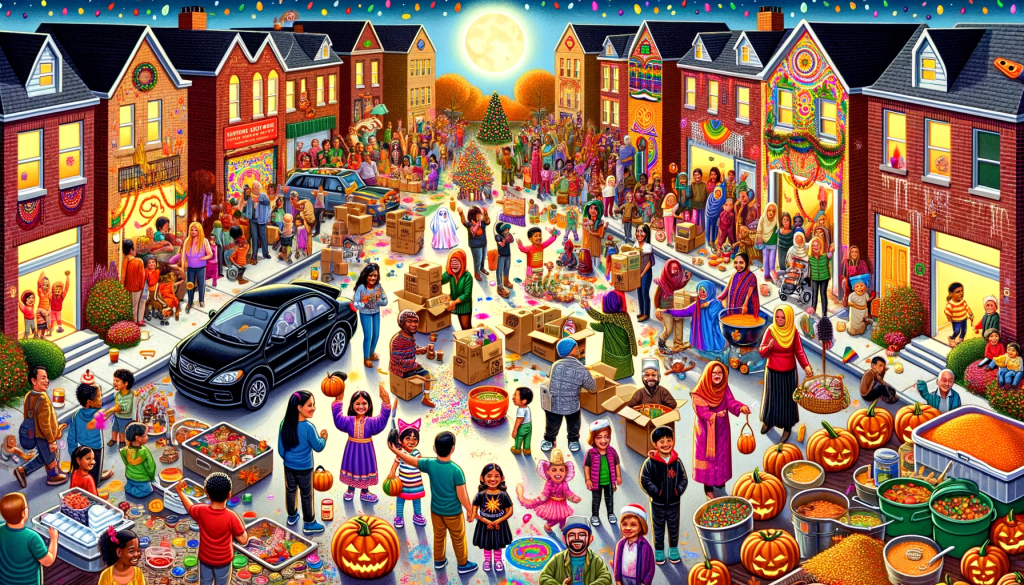
During the Holi festival around my neighborhood in India, kids engage in various activities such as playing with colorful powders, water balloons, and squirt guns, creating a joyful and vibrant atmosphere. They also participate in dancing, singing, and enjoying festive foods with their families and friends. This celebration allows kids to embrace the spirit of togetherness and enjoy the playful traditions of the festival. This scene warms my heart because they have so much fun without any worries about differences. It’s lovely to see them having such a great time without any boundaries. A similar sense of unity becomes readily apparent during Halloween. On this festive day, children from diverse backgrounds don a delightful array of costumes and embark on the time-honored tradition of visiting houses for treats. It’s a heartwarming spectacle as these young revelers, regardless of their backgrounds, come together, sharing moments of laughter and joy that bridge the gaps between them.
Collective celebrations, like community festivals or cultural events, really bring people together. They let us see the beauty of various cultures and traditions, and remind us that unity can thrive in diversity. Gathering to celebrate cultural events and important milestones strengthens the bonds among neighbors and adds richness to the community.
Community Service and Unity
Service is a Sadhana (genuine care and lifelong selfless service) in which we care for others, acknowledging the society that has given us so much and taking responsibility for its well-being is our Dharma (Sense of duty). The essence of service begins with the concept of Sincerity: the quality of embodying authenticity, integrity, and truthfulness in one’s thoughts and emotions. As individuals, the pursuit of wealth, glory, and fame often takes precedence. However, can we consciously set aside these aspirations when engaging in acts of service, all the while ensuring that our efforts contribute to meaningful change in the lives of others. By practicing sincerity, selflessness, and catalyzing change in others, we inherently foster personal growth and transformation.
In his book ‘Together: The Healing Power of Human Connection in a Sometimes Lonely World,’ Dr. Vivek Murthy, the Nineteenth Surgeon General of the United States, points out that a significant underlying issue contributing to health problems in America is loneliness, exacerbated by the trend toward individualism. He proposes an indirect solution centered around the role of neighborhoods in the chapter titled ‘Family of Families,’ suggesting that everyone in the community should become akin to an extended family member. This notion of fostering deeper community bonds and connection aligns with the concept of Dharma, where individuals seek to fulfill their moral and societal duties, align their actions with ethical values, and contribute positively to society. Dharma, in essence, encourages a sense of responsibility, integrity, and harmony with one’s surroundings, ultimately benefiting not only oneself but also the greater community and the world at large.
Connecting Past and Present in Today’s Society
In the ever-changing world of today’s society, where modern trends often take the spotlight, the precious treasures of heritage can sometimes be easily overlooked. However, the core of a harmonious and interconnected society thrives in its ability to safeguard, engage with, and promote its rich cultural heritage. Preserving heritage goes beyond safeguarding physical objects; it’s about cherishing the stories that come with them. These stories knit together a fabric of understanding, letting people connect with their origins and value the tales that have shaped their heritage. Engaging with heritage practices becomes a bridge that spans generations, allowing individuals to partake in rituals their ancestors cherished. This practice honors the legacy of culture, unifying past, present, and future. It is a testament to the enduring power of shared traditions.
At last, I firmly believe America holds the potential to exemplify these principles to the global community through the actions of its people. Although it may demand steadfast dedication to firmly embed these values within American society, the resulting impact will undoubtedly resonate worldwide. The essence of togetherness, deeply rooted in heritage, possesses the unique power to bridge divides not only within groups, states, or countries but across the entirety of humanity. The shared commitment to ensuring basic necessities for all knows no boundaries, reflecting a universal responsibility that, when embraced, has the capacity to unite the world in a collective endeavor toward a healthier, happier, and more compassionate future for all.

 The Hindu Pencil
Leave a comment